

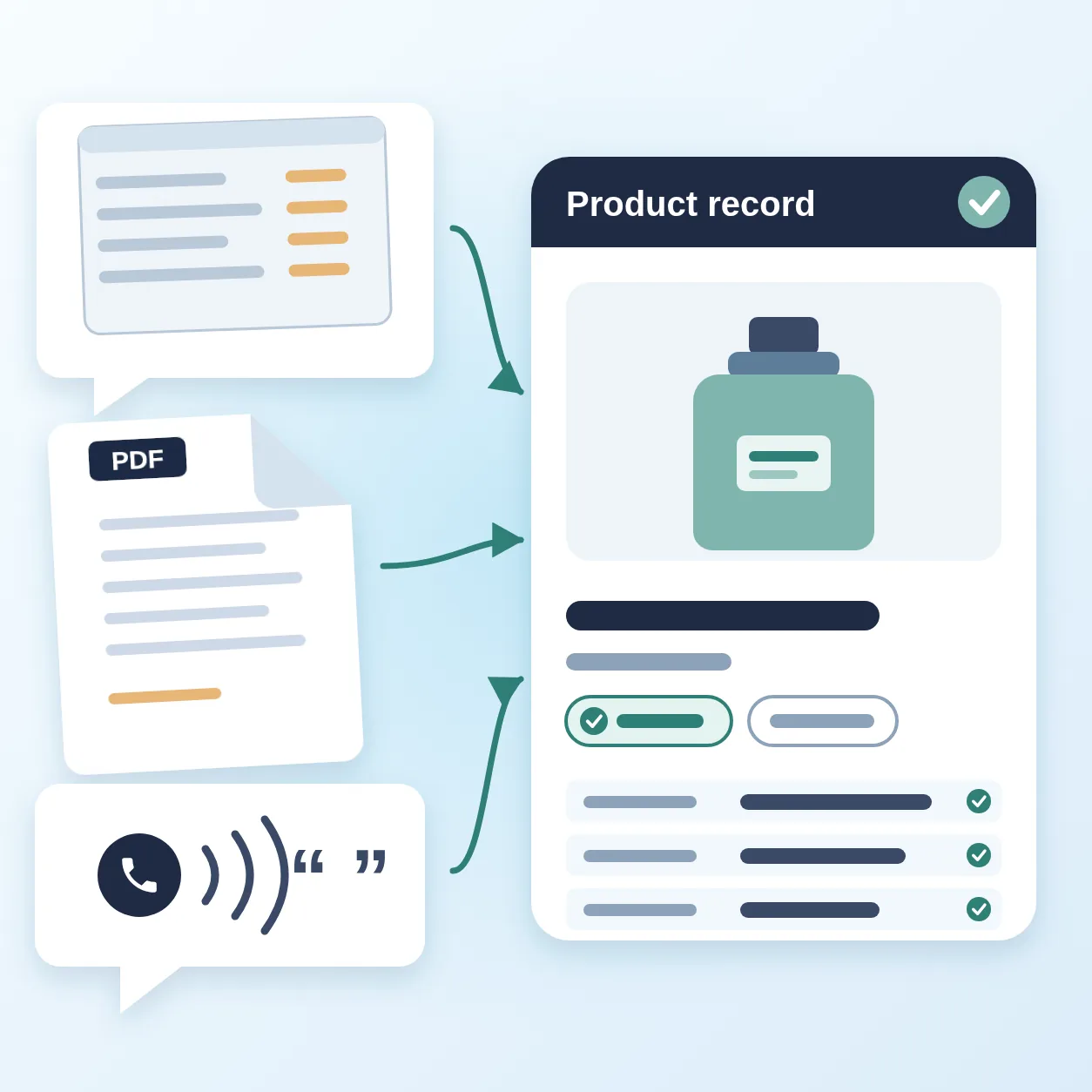
A brand sends a reseller the details of a new product. The details are a WhatsApp photo of a price list, a PDF from last season, and a phone call that ends with “it is the same as the other one”. (This is an illustration, not a specific client.)
Nobody in that chain needs to have been careless. They just had no single place where the product existed.
In short: we are building GridPXM, product information management software, so a product exists as one record before it is shared, sold or listed anywhere. At the end is a short exercise you can run on one product this week.
What did I see working with brands, resellers and distributors?
In my experience, many had product data that lived in files, WhatsApp photos and conversations, or in nobody’s hands at all.
In GridRay, our network-building product, brands decide which resellers and distributors can sell their products, and on which channels. Across those networks, product data was rarely consistent. It was not a tool problem first. There was nothing consistent to put into a tool.
What I noticed most was the time. Partners kept asking the same questions: what is the material, which photo is current, is this the latest detail. Each answer was found, typed and sent again, one message at a time. Product information was re-sent to each business partner in whatever format they asked for. In my experience that time was real, and few people were counting it.
GS1 India and Kanvic Consulting’s 2026 study of Indian e-commerce describes the same pattern on marketplaces. Because each platform needs different attributes and formats, “the same SKU is repeatedly reworked across channels” (page 11), and manual uploads and template mismatches lead to “conflicting versions of the same product”. The study covers marketplace sellers and does not measure time. What I describe is one step earlier, between brands and their partners.
My earlier post on what scattered product data costs you covers five files that disagree, with US case-study data alongside the Indian figures. This is the step before that: sometimes there is no file to disagree. Our post on how AI shopping tools choose, and skip, products shows why the gap matters beyond your own listings.
What did we get wrong early?
I assumed that in e-commerce, the businesses we worked with would already have their product data ready. I expected some gap. I did not expect one this wide, and that assumption was our mistake.
So we stopped assuming anyone would arrive with clean data. With GridPXM you can start from a blank page, with ready-made attribute sets to begin from, or bring your spreadsheet and we load it with you.
What is our bet for product information management?
A product workspace instead of disconnected forms. One place where a product is created, enriched and checked, so every team and channel starts from the same record, and the answer to a partner’s question lives in one place. You can export that record, so your data stays yours.
The trade-off: GridPXM makes the record, and sharing it with partners goes through GridX, our product for sharing product data. GridX is in development, so GridPXM includes a lightweight version for now: catalogue exports as CSV, sent by signed link to an email list, manually or on a weekly or monthly schedule, with a record of who downloaded.
What four principles guide GridPXM?
- Product identity first. A product shows what it is at a glance, before anything else. “It is the same as the other one” should never be the answer, because the product is a record, not a phone call.
- Edit by section. You finish one coherent part of a product, such as its attributes, in one deliberate step, with an explicit save or cancel.
- Readiness you can act on. GridPXM checks a product against its rules before it can be published, blocks publishing while errors remain, and takes you to what needs work. The gap shows up before a partner asks about it.
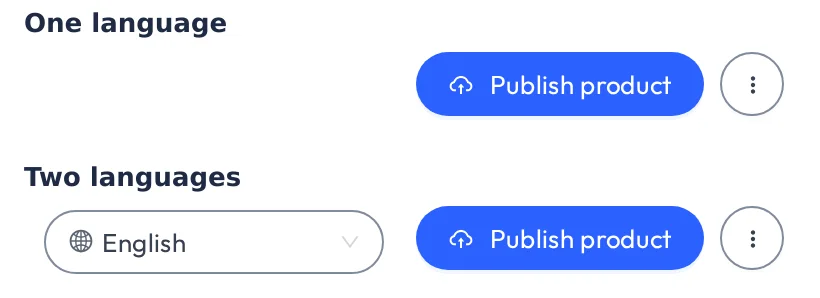
- Language controls only when needed. In a one-language workspace, language controls stay out of your way. They appear once your workspace has more than one language, which we set up with you on request.
The screens below are from a demo product in a test workspace, not a customer. The designs will keep changing.



What can you do this week, with the tools you have?
Take one product and find out where the answers about it really live. This works with a spreadsheet and a pen.
- Pick the product partners ask about most.
- Write down the last three questions they asked about it.
- For each question, note where you found the answer, which source should win, and who owns it. Count how many of the three you can answer from one place without searching today.
- Fix the question a partner asked twice first. A repeated question is a useful place to investigate, though it can have other causes.
- A week later, ask the same three questions again and count again. Success is a higher count.
A filled example row:
- Question: What is the material?
- Where I found it: Supplier PDF says polyester, WhatsApp photo says cotton
- Source that should win: Current spec sheet
- Owner: Catalogue lead
“Source that should win” means the one place everything else copies from. The effort is one product in one sitting.
This finds where answers live. It cannot tell you whether an answer is right, so check each winning source against the current spec sheet or the physical product.
What does GridPXM not do?
Three boundaries:
- GridPXM does not push or sync listings to marketplaces or partners.
- It does not fix a bad photoshoot or set your prices.
- It is not a replacement for deciding who owns each field. A new tool becomes another copy if nobody decides that.
Who is it for, and how do you join?
GridPXM is for brands and sellers whose products pass through several hands, and who want one agreed record. Sign up.
I would also like to hear from you. When you sign up, the form asks for the biggest problem you face managing product data today. Tell us, and I will read it.
None of this helps a catalogue nobody owns. Get the product right once, and every channel starts from the same truth.