



One Product. Every Context.
Your product doesn't change. Its context does. GridPXM helps businesses manage, enrich and adapt product information for every channel, audience and context.
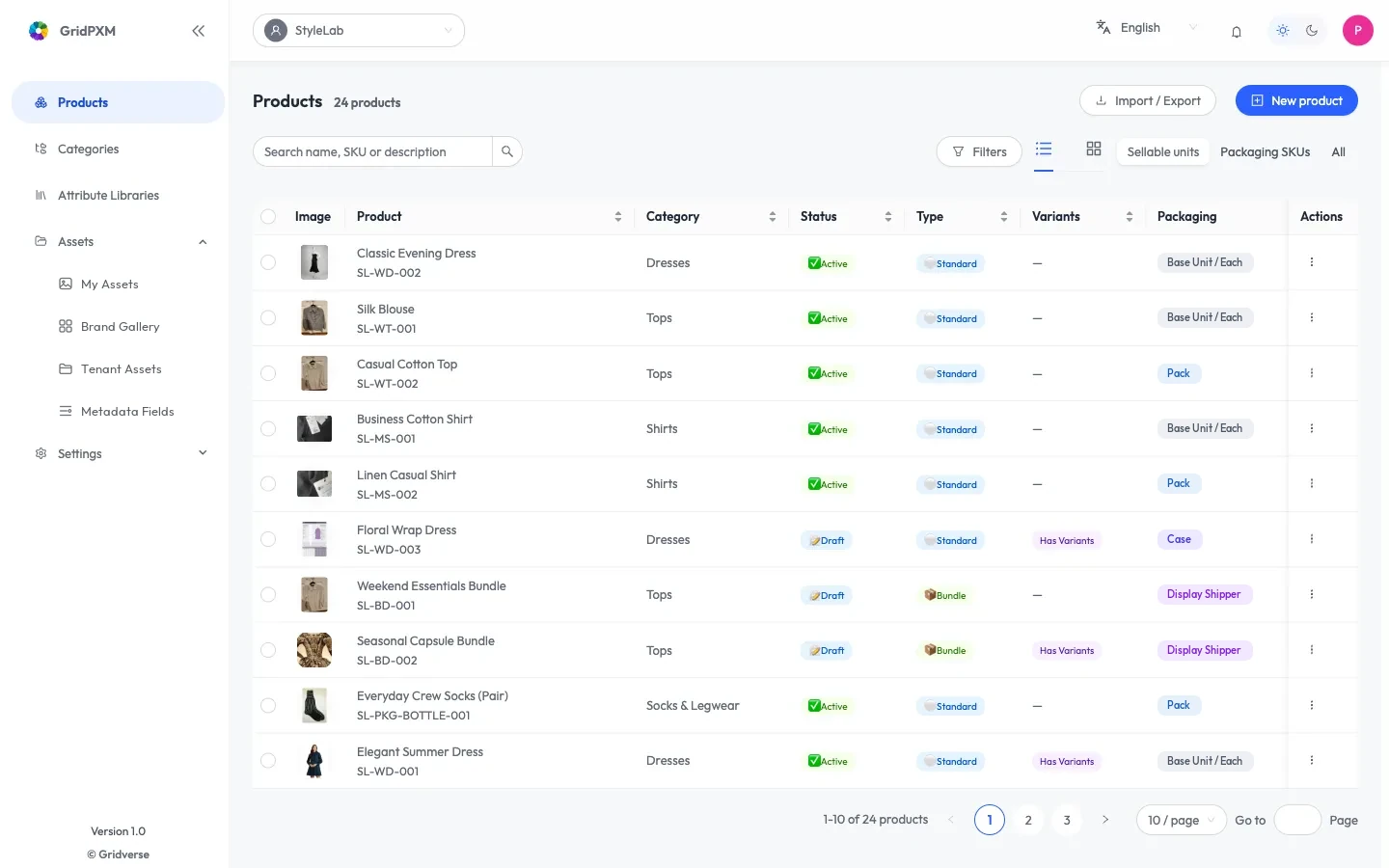
Same product. A different question in every context.
Marketplaces, AI assistants and the people who sell for you all need to understand your product. GridPXM turns scattered spreadsheets into one checked product record each of them can rely on.

-
Marketplace: "Does it match our template?"
GridPXM shows which required details are still empty, so your team can fill them in before you upload.
-
Website: "Why should I buy this?"
The full specifications behind the story you tell.
-
WhatsApp or email: "Quick, is it right for me?"
Your sales team replies with the right fact, because it's already in GridPXM, not buried in an old PDF or Excel file.
-
Distributor: "How is it packed and shipped?"
Specifications, pack sizes and carton details.
-
New market: "Is this right for my country?"
Names, required details and language change by market. It's football in Manchester and soccer in Chicago. Same boot, different context.
Sound familiar?
Most teams that sell products have lived through at least one of these.
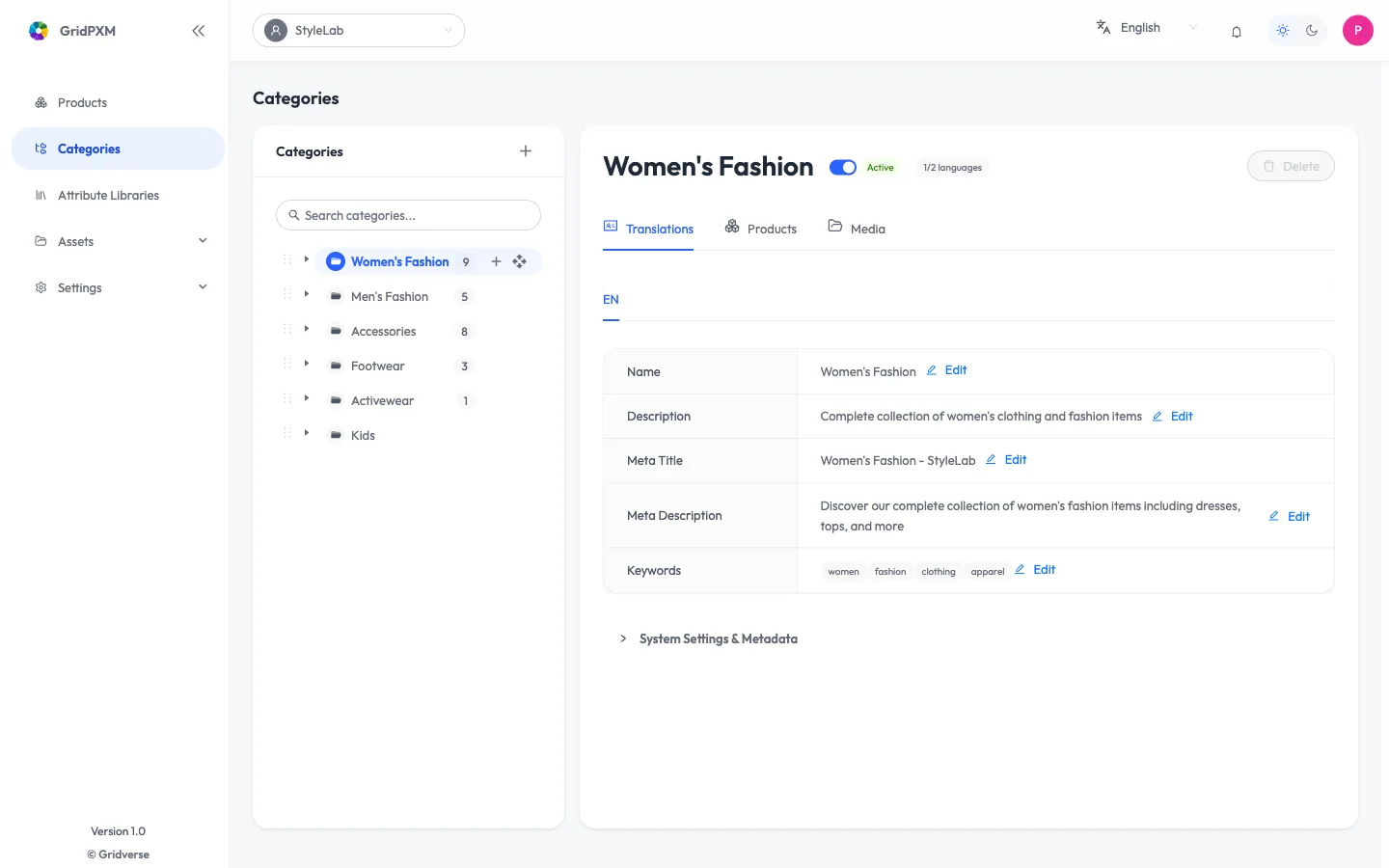
Everyone holds one piece of the product
The photographer has the images. Production has the materials. Compliance has the certificates. Warehousing has the shipping weight. Nobody has the whole product.
The 47-column spreadsheet
One tab per category. Formulas only one person understands. The same product listed as "Parrot Green", "Light Green" and "Lime". And one wrong sort away from scrambling every row.
The marketplace template, filled in by hand. Again.
Every new marketplace brings a new template, and someone copies the same product details into it, one cell at a time.
The image folder with fourteen versions
v1, v1-final, v1-final-FINAL, v1-final-FINAL-2, and nobody's sure which one is live.
The new-market scramble
Selling in a new country means a new name, new required details and a new language. Someone rebuilds every listing from scratch.
The customer question nobody could answer
A customer asks sales "Is this waterproof?" The PDF they were handed doesn't say. They dodge the question, and the sale goes cold.
Messy data doesn't stay in your spreadsheet
Online, it shows up wherever your products are listed, searched or recommended.
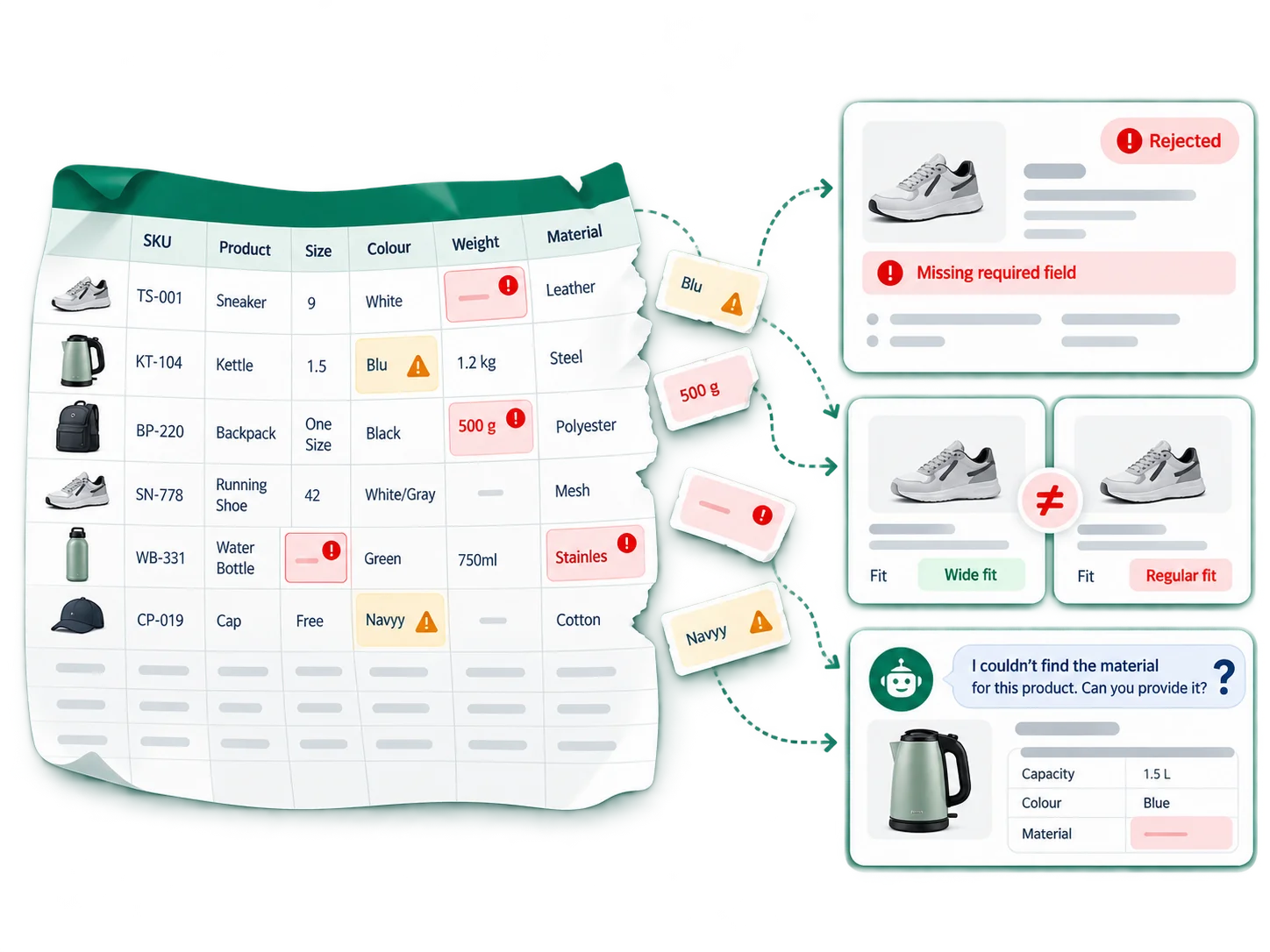
Listings get rejected or held back
A required field is missing or a category doesn't match, and the marketplace rejects or suppresses the listing until someone finds and fixes it.
The launch waits on the catalogue
The product was ready. The listing wasn't: dimensions missing, three images unresolved, and one required field nobody had filled in.
AI gets conflicting information
Your site says "wide fit." A marketplace says "regular fit." When your facts disagree across sources, it's harder for an AI assistant to be sure which is right.
AI can't find the detail it needs
A parent asks for "wide, stable toddler shoes with good arch support." Your shoe may fit, but if those details are buried in a paragraph or never recorded, they're harder for an assistant to match to the question.
Offline, it travels with the people who sell
Your sales team, distributors and dealers are channels too. They answer customers from whatever file they were sent last.
The old PDF still in circulation
A dealer quotes a spec from a catalogue that was replaced months ago. Nobody told them, because nobody knew they still had it.
The sell sheet with last season's case pack
A buyer orders from a sheet that still shows the old carton size, and the shipment arrives in the wrong quantity.
Every partner wants a different file
One distributor wants a spreadsheet, another wants a PDF, a third wants their own template. Someone rebuilds the same facts each time.
The forwarded message nobody can trace
A photo and three lines of specs, forwarded five times. Nobody knows if it's still right.
Same kettle. Four markets.
The product doesn't change at the border. What each market asks you to show does. GridPXM keeps every language version of your text, plus fields for the details each market asks for, on one product record. Examples only, not legal advice.
European Union
Who the responsible person in the EU is, and safety information in the buyer's language.
United States (California)
A Proposition 65 warning, where it applies to the product.
India
Maximum retail price, net quantity, country of origin and manufacturer details on the listing.
Saudi Arabia
Product information in Arabic, alongside English.
Start with the product data you already have
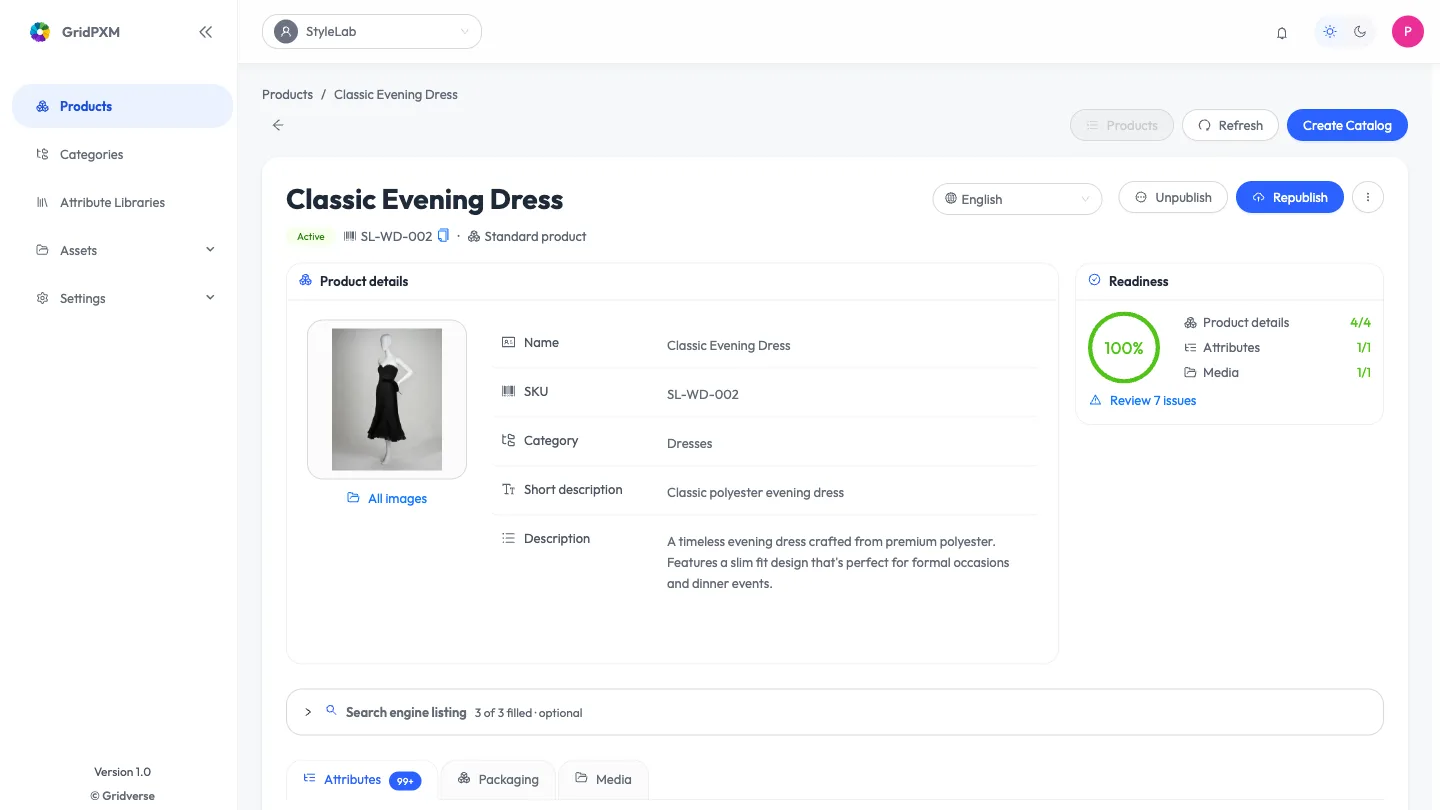
Bring your product data in as a CSV, and GridPXM shows you exactly what needs fixing before anything is saved.
Import and understand
Bring your product data in as a CSV. GridPXM checks every row and shows you what's missing or wrong before anything is saved.
Clean and organise
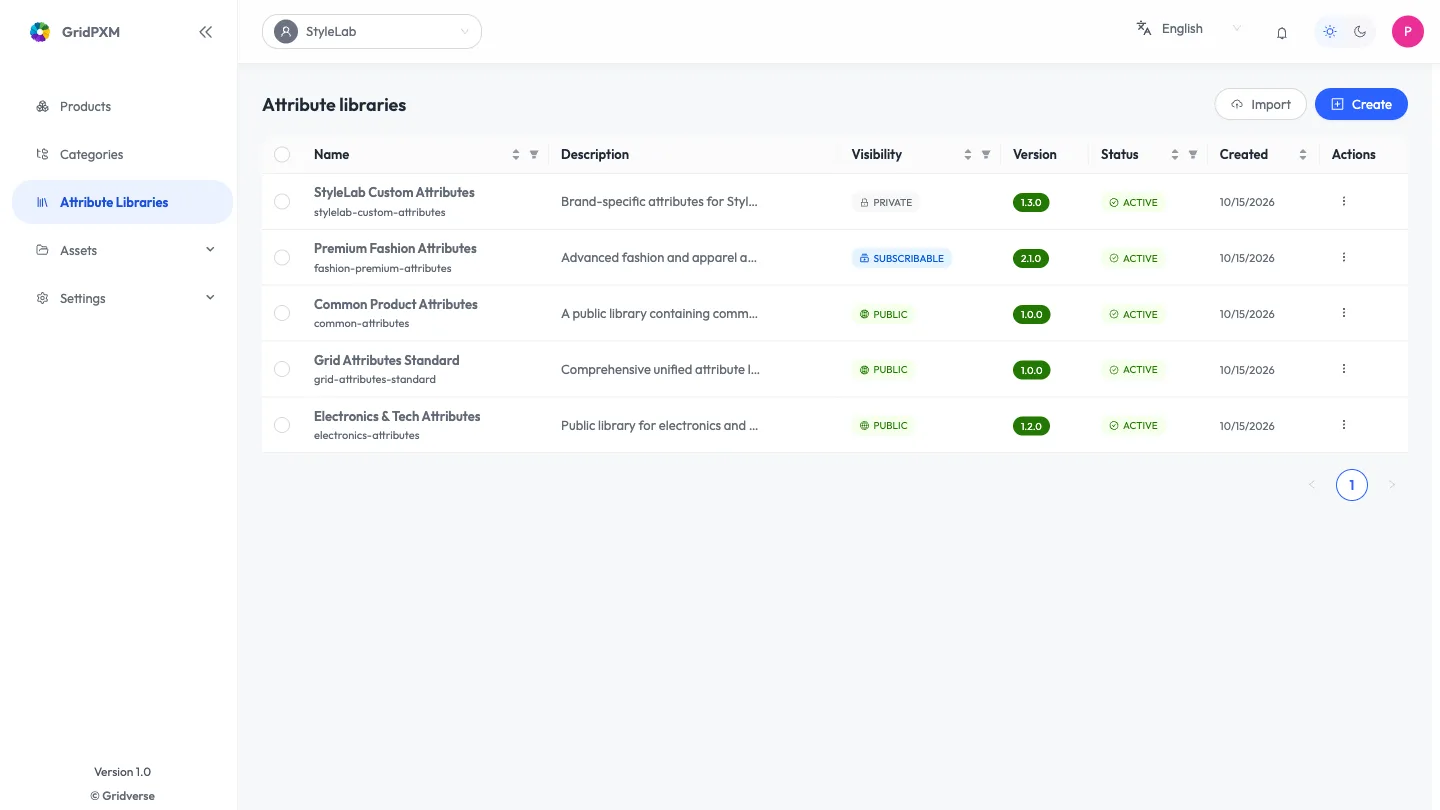
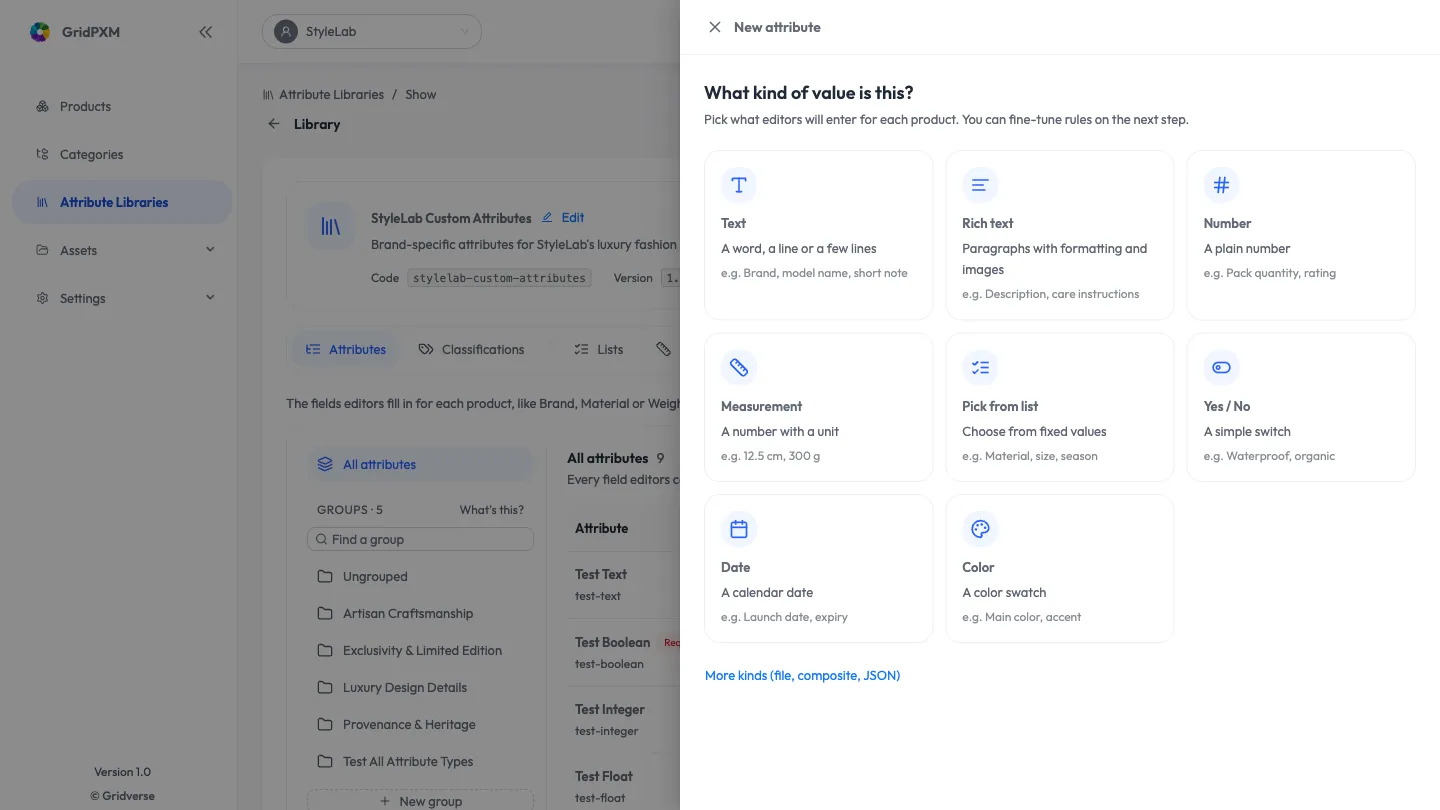
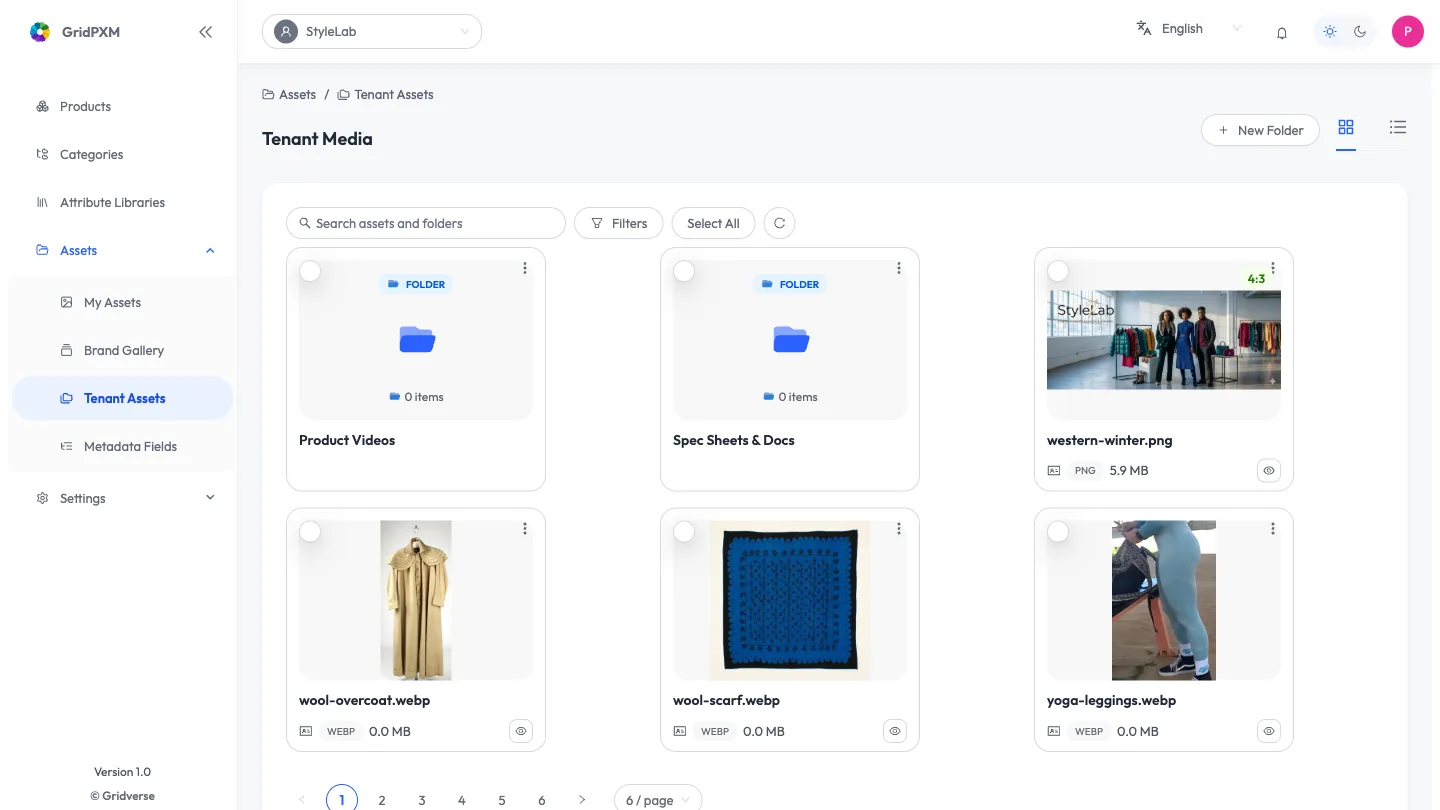
Fix what's flagged, and sort every product into categories that make sure the right details are filled in, with its images alongside.
Keep it ready
Every product shows what's still missing, so your catalogue stays complete as it grows. When a marketplace, a distributor or your own team needs it, export it as a CSV file.
Enrich and adapt
Add descriptions, specifications, translations and images, and the details each market asks for.
One checked place for every product
Structure, checks and images in one place, so your catalogue stays consistent as it grows and every version starts from the same facts.
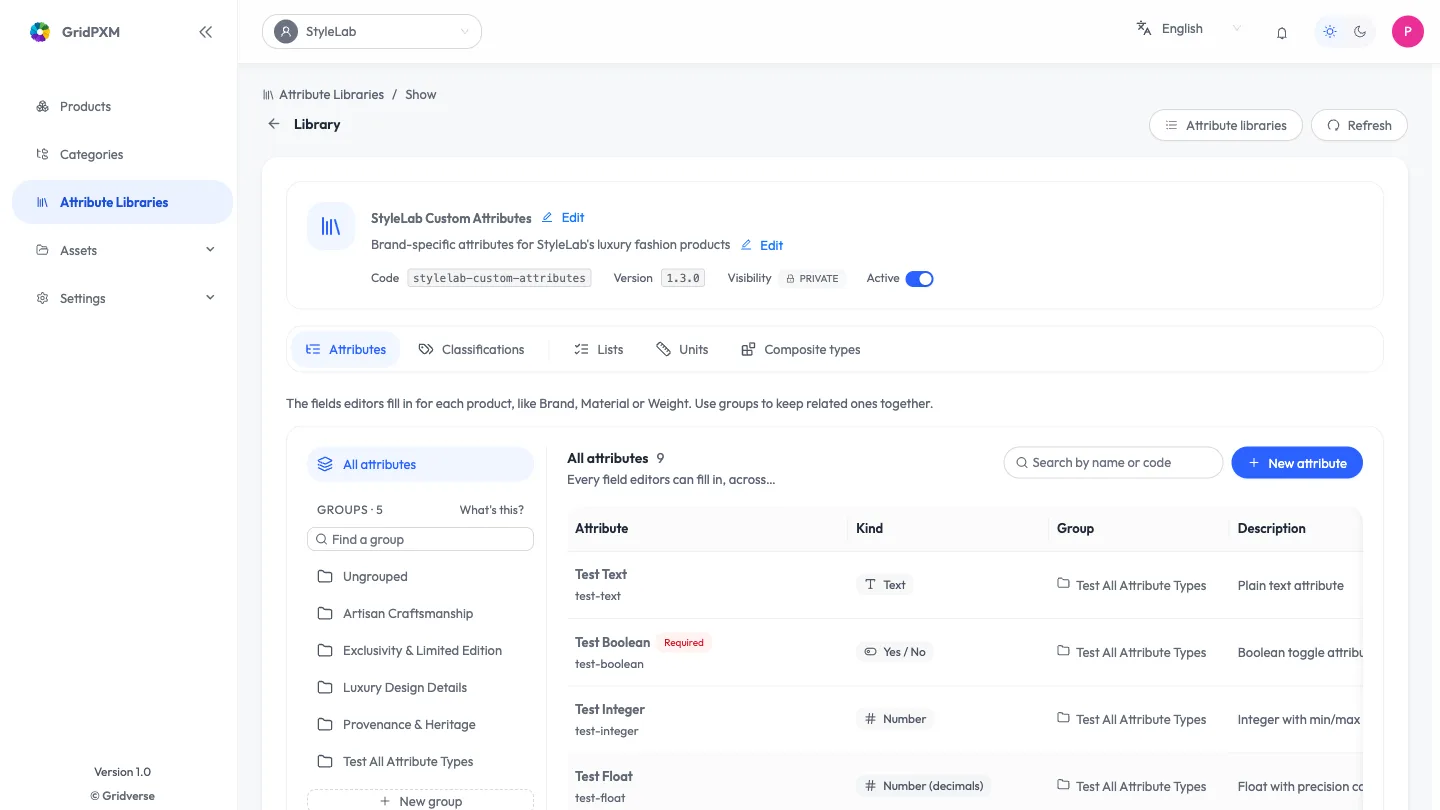
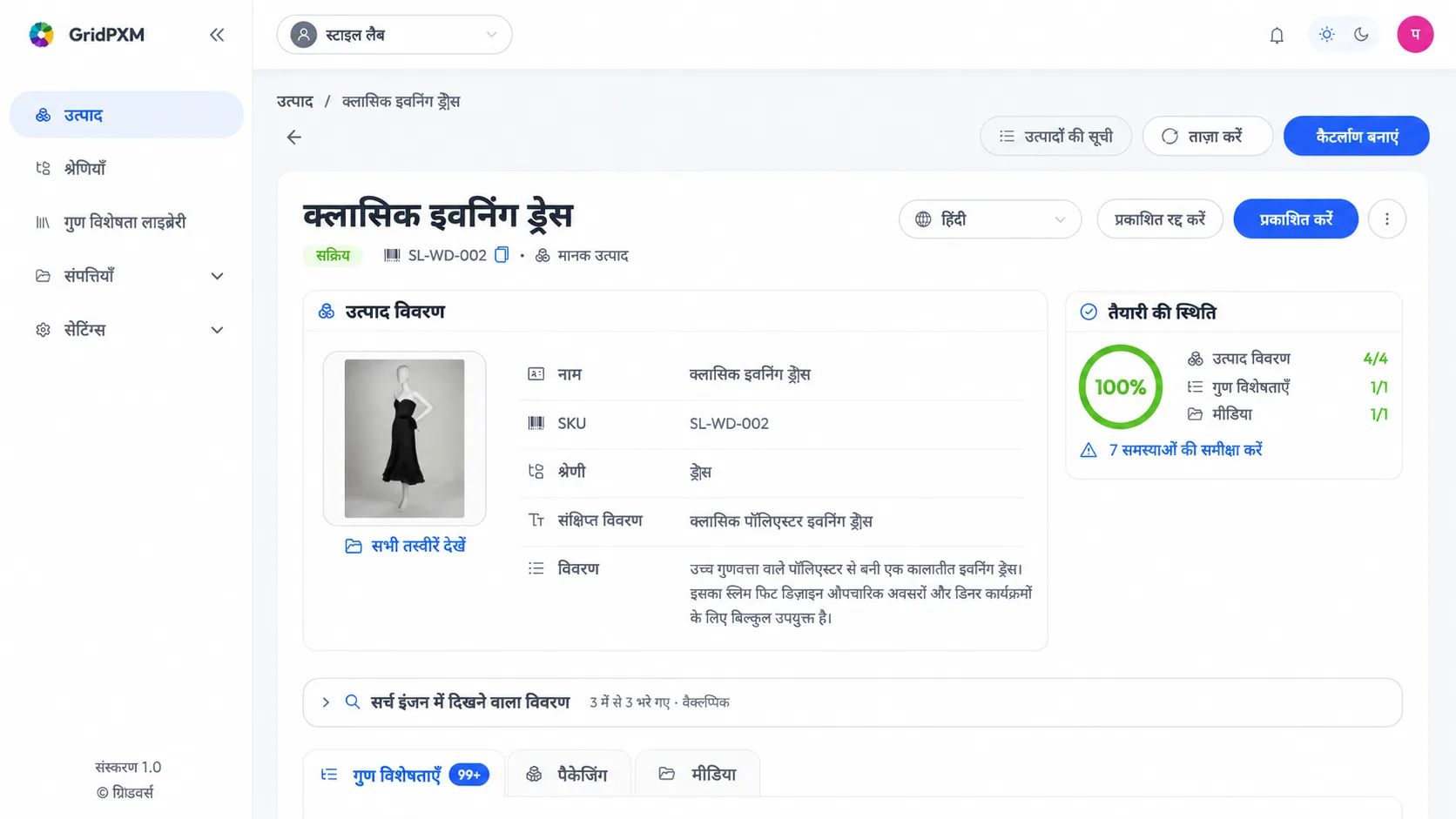
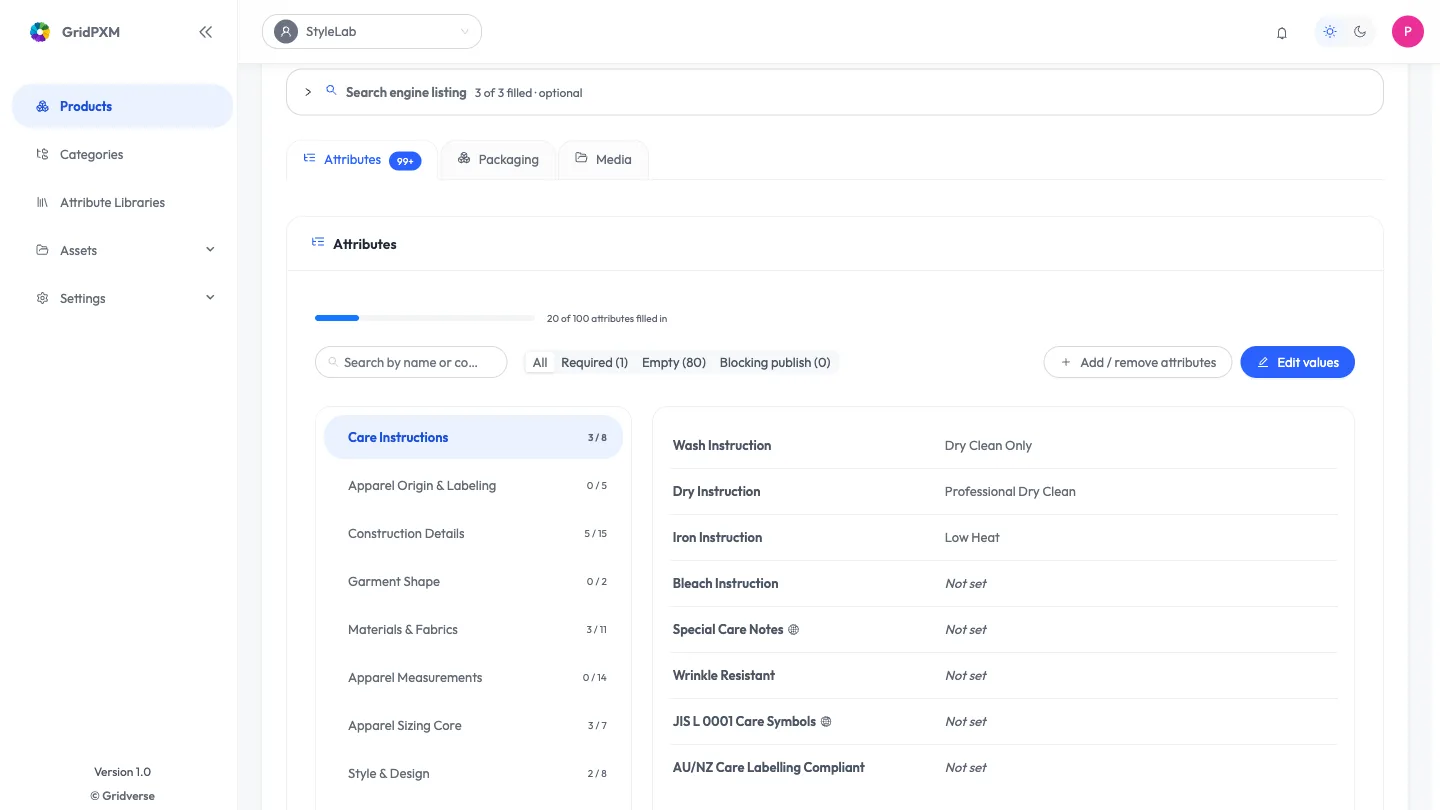
What GridPXM does today, and what's coming
GridPXM takes your product information from mess to ready. GridX, now in development, takes it from ready to everywhere. GridPXM is a good fit today if your product data lives in spreadsheets and folders and you want it in one checked place.
Ready today: one checked catalogue
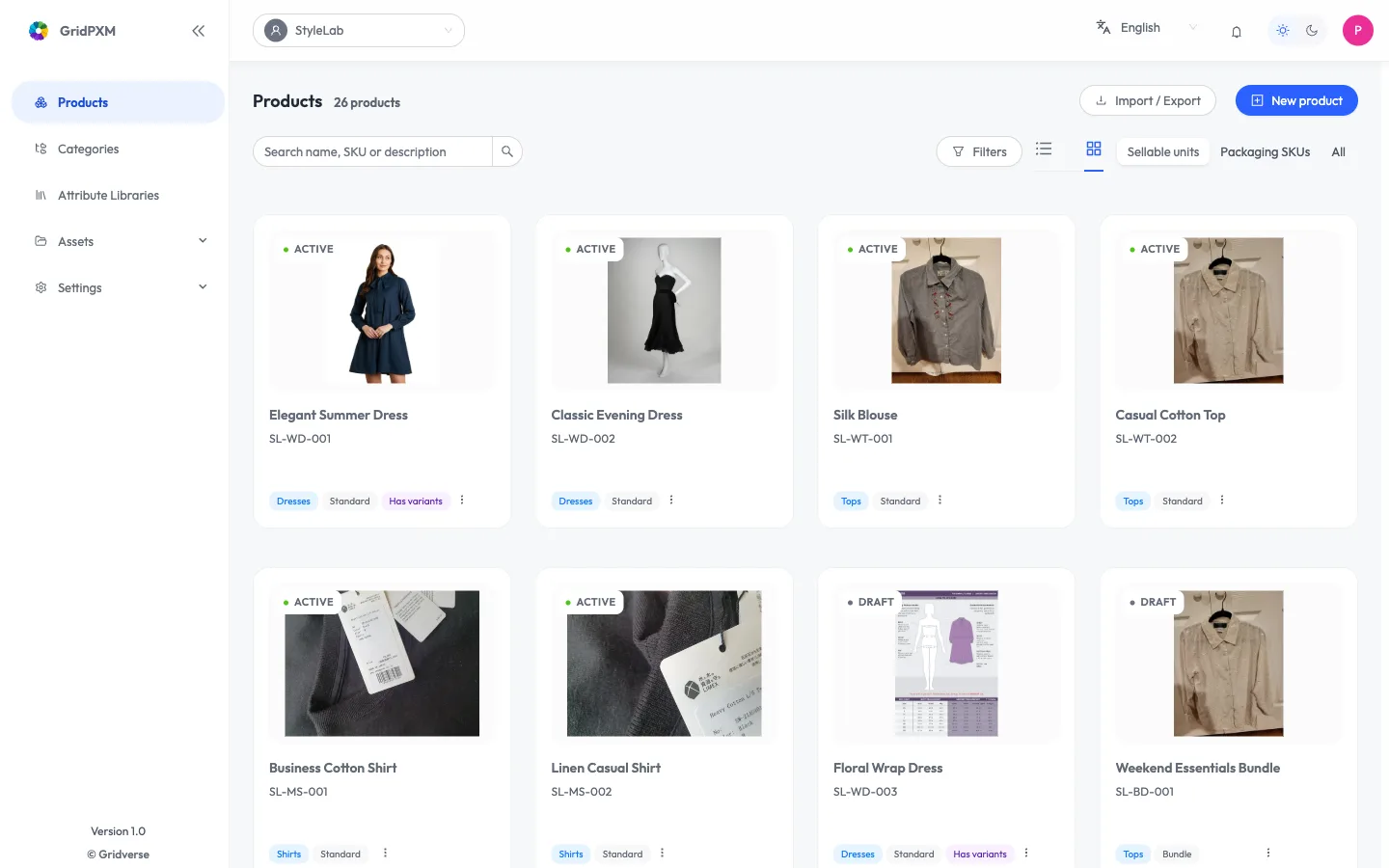
Import your product data, structure products by category, check every one, and keep images, video and documents in one asset library, with translations on the same record.
Ready today: spreadsheet files
Export your catalogue as CSV files whenever a marketplace, a distributor or your own team needs it.
Ready today: your data, always yours
Take a full copy of your catalogue data out whenever you want it. No lock-in.
Coming: sharing with GridX
Sending product data to channels, distributors and dealers is the job of GridX, our product for sharing product data, now in development.
We're opening GridPXM to a selected group
We're working with a selected group of brands, marketplace sellers, ecommerce sites, distributors and stores, in India and beyond. Put GridPXM to work on your real catalogue, and help shape what we build around how your business actually operates.
Early access
Put GridPXM to work on your own catalogue.
Talk to the people building it
Share feedback directly with the GridPXM product team.
Support as you start
We help you bring your data in and set up the languages you sell in.
Shape what comes next
Tell us how your business works, and help decide what we build next.
Before you join
What is GridPXM?
Is this a PIM?
Does GridPXM include DAM (digital asset management)?
Do I have to stop using Excel?
What if my product data is incomplete?
Can I manage products in more than one language?
Does GridPXM help with distributors, dealers and sales teams?
Will GridPXM make my listings compliant?
What's the difference between GridPXM and GridX?
I already sell on Shopify, Amazon or another marketplace. Does this replace that?
Does GridPXM send my products to Amazon or Shopify?
What does it cost?
When can I actually use it?
Is my data private?
Can I get my data out?
Do I need a minimum number of products to join?
Who is early access for?
Bring your product data. See what's missing, what's wrong and what's ready.
Our goal is to make product information ready to work wherever your products are discovered, evaluated and sold. Tell us how your business manages it today.